What is RFID and how it is used
RFID (Radio-Frequency Identification) is an identification method used as access control for our chargers. It works via a physical tag or card that functions as a key.
When a user holds their RFID tag against the charger, the ID is read and sent to the cloud. The system verifies whether the tag is authorized and determines whether charging should be allowed or denied.
RFID is primarily used in multi-user environments, such as companies or housing associations. It enables:
- Controlled access to chargers
- Traceability (who charged, when, and how much)
- Basis for billing electricity costs per user
Activating RFID
When viewing a charger, the following function is available:
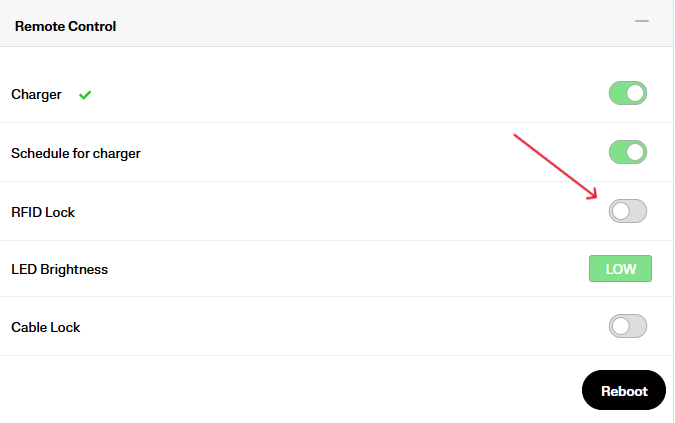
This button is used to activate RFID locking. When the function is active, an approved RFID tag is required to start charging.
Adding RFID tags
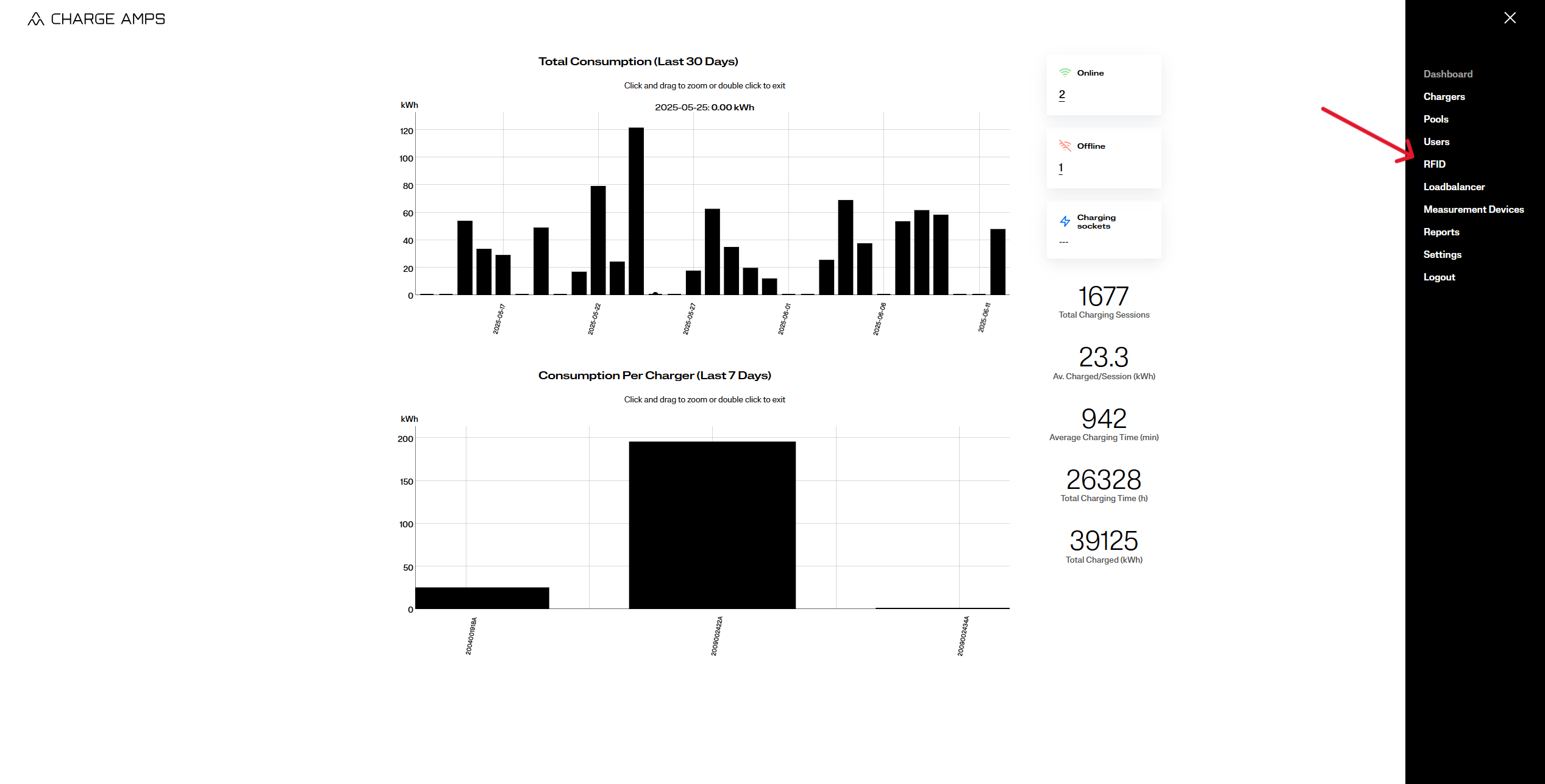
After activation, RFID tags must be registered in the same organization as the charger. This is done by an administrator or partner via the RFID tab.
In this view, all registered RFID tags are displayed:
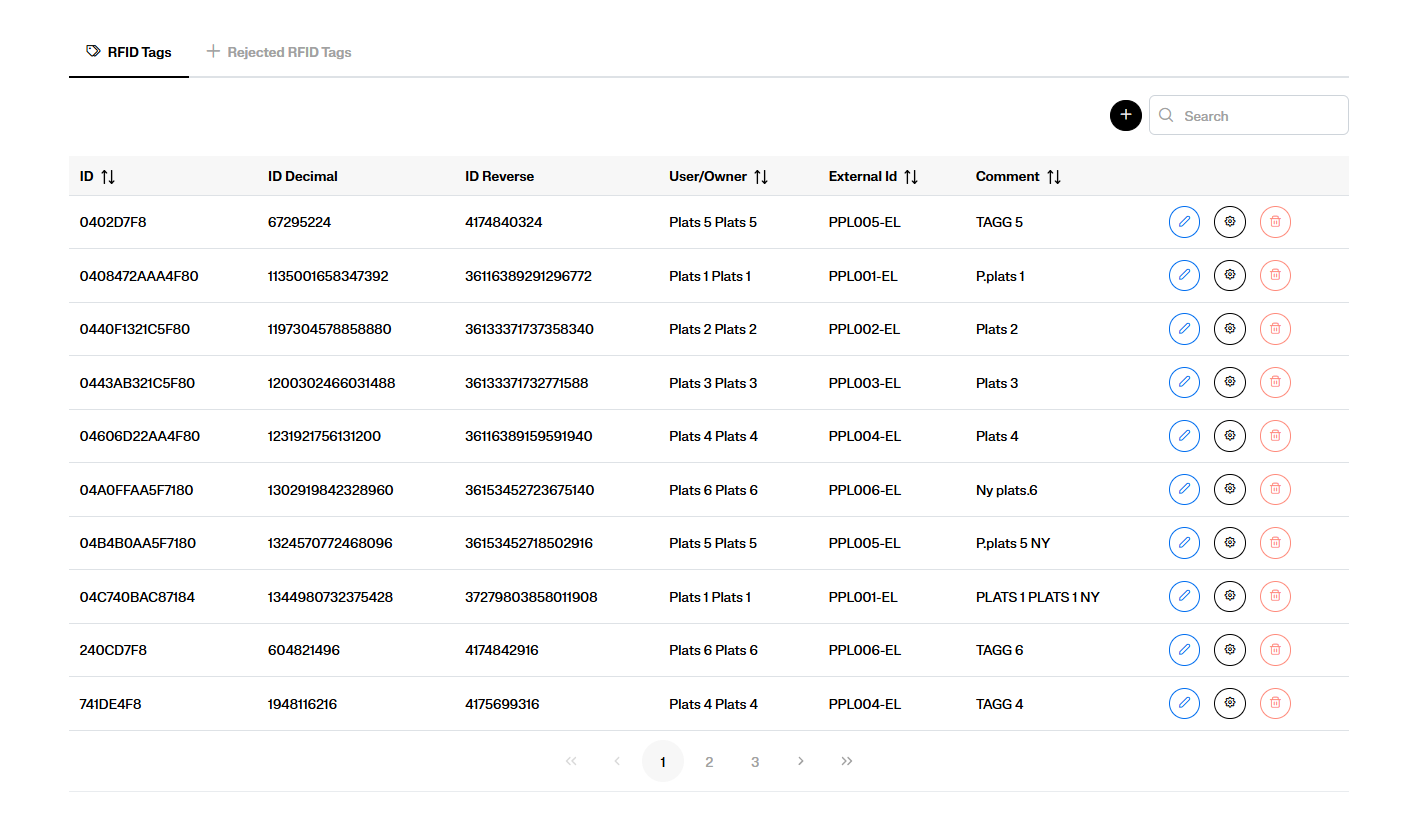
Functionality
- Add a new tag via +
- RFID is entered as a hexadecimal ID (combination of numbers and letters)
Option to specify:
- External ID (used in reports)
- Comment (internal note, e.g., location or usage)
Actions per tag
- Blue pencil: edit External ID and comment
- Red trash bin: delete the tag
- Black gear: manage access
Access control
Via the gear icon, there are two options:
RFID access to chargers
Grants access to specific chargers. Selected chargers are unlocked for the tag.
(Requires the charger to be online to receive the update.)
RFID access to pools
Pools are used to group chargers (e.g., “Garage 1”, “Garage 2”).
A tag can be granted access to an entire pool, and thereby all chargers in that group.
Linking to users
RFID tags can be linked to a specific user via the Users tab.
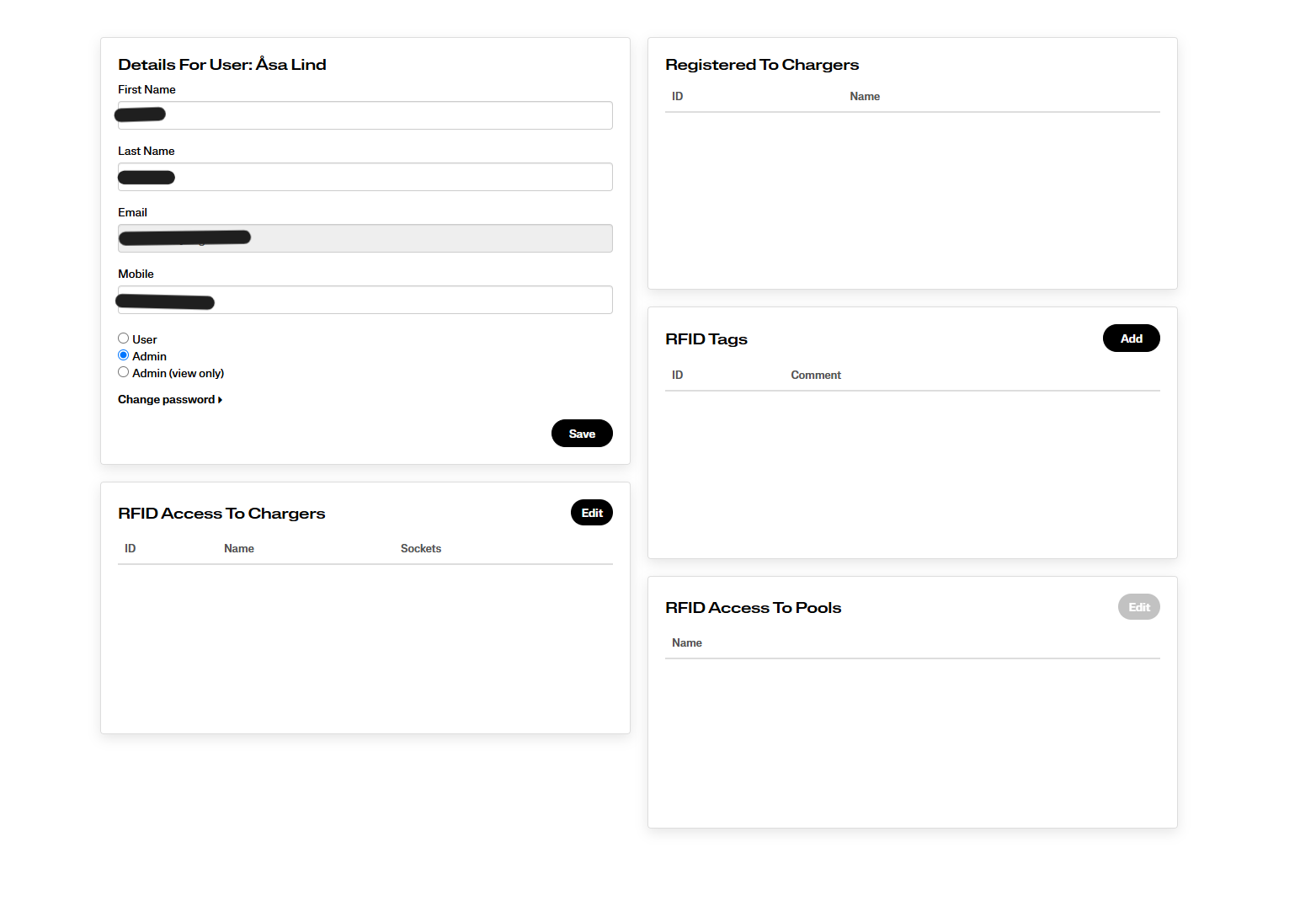
In the user profile:
- Add under RFID Tags: links a tag to the user
- RFID Access To Chargers: controls which chargers the user's tags have access to
This method can be used instead of the gear icon and provides the same result.
Limitations
- An RFID tag can only be registered in one organization at a time
- The same tag cannot be used simultaneously between, for example, a private charger and a workplace if they belong to different organizations
TL;DR
- RFID acts as a key to the charger
- Active RFID locking requires an approved tag to start charging
- Tags must be registered in the cloud to function
- Common formats: card or tag
- Used for access control, traceability, and billing